
Screens and toddlers have two things in common: they both demand constant attention, and neither has a volume control. That is the dad joke out of the way.
Now the serious version. After thirty-two years of childcare, the screen time question comes up at nearly every enrollment tour. The answer most parents want is a number — how many minutes per day. The answer that actually matters is what the screen is replacing. That is where the research points. That is what the American Academy of Pediatrics guidelines are built around, even when the headlines compress it to a minute count.
The screen time conversation has also changed since 1994. It used to be "my child watches one video before bed." Now it is "the pediatrician said no screens but the only way I can get through dinner is..." Both are real decisions made under real constraints. This post covers what the research actually shows — not the summarized version that strips out the context.
In this article
- What the AAP actually recommends, by age
- Why toddlers learn less from screens than from people
- What "quality" actually means
- What heavy screen use displaces
- When screens go from tool to problem
- Practical alternatives — not a lecture
- How we handle screens and when to look elsewhere
- Frequently asked questions
What the AAP Actually Recommends, by Age
The American Academy of Pediatrics media guidelines break down by age. Many parents are working from an older version in their heads — the guidance changed again in January 2026. Here is where things stand.
- Under 18 months: no screens except video chat. Video calls with family members are explicitly permitted because they involve live, responsive social interaction — not passive viewing.
- 18 months to 2 years: if you introduce media, limit it to high-quality programming and watch together. Solo passive viewing at this age is discouraged across the research.
- Ages 2–5: no more than 1 hour per day of high-quality content. Co-viewing is recommended throughout. The one-hour limit applies to recreational screen use — not video calls.
The AAP does not treat all screen time as equivalent. A slow-paced program watched with an engaged adult is different from a tablet propped against a cereal bowl. The guidelines reflect this. Most summaries in the news do not.
The 5 Cs — the AAP's current framework, as of January 2026
As of this year, the AAP has moved away from treating the hour counts above as the whole answer. Its 5 Cs framework — Child, Content, Calm, Crowding Out, Communication — asks parents to weigh the specific child and situation rather than just a minute count. The numbers above still matter as reference points. They are no longer treated as the whole answer.
- Child: a rule that works for one child may not fit their sibling.
- Content: what they watch matters more than how long.
- Calm: can your child settle down and fall asleep without a screen?
- Crowding out: is the screen displacing sleep, play, or family time?
- Communication: talk regularly about what they watch and play.
Notice that "Crowding Out" is the fourth C, not the first. It has always been the point of this post — the AAP just gave it a name.
Honest note: These guidelines describe an evidence-based ideal. They do not account for single-parent households, parents with disabilities, children with medical needs, or a dozen other real circumstances. The research identifies risk. It does not pass judgment on parents doing their best under constraints. Use it for calibration, not guilt.
Why Toddlers Learn Less from Screens Than from People
This is the finding most parents have not encountered. Researchers call it the video deficit effect: toddlers take roughly twice as long to learn a new action when it is demonstrated on video compared to watching a real person do it in front of them.
The reason matters. Learning in early childhood is not passive. It requires live, responsive interaction. When your child is learning a word from you, you adjust, respond, repeat. You look where they look. You slow down when they seem confused. A screen cannot do any of that. It plays the same content regardless of whether your child is paying attention, frustrated, or has already moved on to something else.
This does not mean screen-based content has no value. It means the mechanism of learning from screens is different — slower, and more dependent on an adult present to bridge the gap. The parents who get the most out of educational content are the ones sitting next to their child and talking about what just happened. Zero to Three is consistent on this across more than a decade of research summaries.
Honestly, this is why the word "educational" on an app or a show does not mean as much as it sounds. The education happens in the room around the screen, not inside it.
What "Quality" Actually Means
The AAP recommends "high-quality" programming without always defining it clearly. Here is what the research actually distinguishes.
Co-viewing versus background TV
A child watching a program with an adult who comments — "look, she is upset, what do you think happened?" — gets different outcomes than the same child watching alone. The social interaction around the content is doing most of the work. Background TV is the opposite: a television running in the room while a child plays provides no benefit and consistently reduces the quantity of parent-child conversation in the room, even when no one is watching it. Turning the television off during meals and play is one of the most consistent recommendations in the research.
Interactive versus fast-paced passive content
Programs that pause, invite responses, and slow down to allow processing are different from fast-cutting commercial content. Rapid scene changes and high-stimulus audio are associated with attention difficulties in some studies. Slower, more responsive programming is not. Pacing is one of the meaningful quality dimensions worth considering when choosing content for this age group.
What Sesame Street actually shows
Sesame Street is the most studied children's program in history. The research on vocabulary gains, letter recognition, and school readiness is consistent across more than fifty years of studies. It was also designed to be watched with an adult — the original production model assumed a caregiver in the room. That design assumption is part of why the outcomes hold. It is not magic television. It is television built around co-viewing and conversation.
What Heavy Screen Use Displaces
The core argument in the research is not that screens are inherently harmful. It is that heavy screen use reliably displaces specific activities that are irreplaceable at this age.
Sleep
Screens before bed delay sleep onset. Blue light suppresses melatonin. This is not a contested finding — it is consistent across age groups and well-documented in young children. For toddlers, whose sleep needs run 11–14 hours per day and whose brains consolidate learning during sleep, disrupted sleep has downstream effects on mood, attention, and behavior. The AAP recommends no screens for at least one hour before bedtime.
Physical play
Time on a screen is time not spent moving. Toddlers and preschoolers need three hours of physical activity per day according to pediatric guidelines. Passive screen time trades directly against that. Outdoor time, gross motor play, and whole-body exploration build spatial reasoning, coordination, and sustained attention. None of those things happen while sitting still in front of a tablet.
Face-to-face conversation
Language development in the early years runs on conversational turns. Children need thousands of back-and-forth exchanges per day to build the language architecture they need before kindergarten. Screens — even language-rich programs — do not substitute for conversation because they are not contingent. They cannot respond to what your child just said. That responsiveness is the mechanism. It is not a nice-to-have.

When Screens Go from Tool to Problem
Most screen time conversations focus on total minutes. The research points to specific contexts that are more reliably associated with negative outcomes, regardless of how long the screen is on.
- Background TV during meals and play. This is the most consistent finding. A television running in the background during dinner reduces parent-child verbal interaction and is associated with slower vocabulary development. The child does not have to be watching. The ambient noise and flickering change the social environment of the room whether anyone looks at the screen or not.
- Screens at bedtime. Blue light, stimulating content, and the social pull of a device all work against sleep onset. Sleep disruption at this age compounds. A child who is chronically under-slept is chronically dysregulated — and the screen that helped them settle tonight is part of why they cannot settle tomorrow.
- Screens as the primary interaction of the day. Using a tablet to occupy your child during a car ride is a parenting tool. Using screens as the main source of stimulation across most of the day is a pattern that consistently shows up in language delay research. These are not the same situation and the research does not treat them as such.
A child watching thirty minutes of age-appropriate programming while a parent prepares dinner is not the same as a child whose screens substitute for conversation, play, and movement across most of the day. The Common Sense Media age-by-age guidance helps frame this distinction practically — it is worth bookmarking.
Practical Alternatives — Not a Lecture
If you are working on reducing screen time, removing the screen without replacing it does not work. Here is what actually holds a toddler's attention.
- Audiobooks and children's podcasts. Audio does not suppress melatonin, does not produce a screen glow before bed, and fills the "something needs to be happening" niche for children who need ambient engagement. Good options exist for every age from 18 months up.
- Music and movement. Five minutes of dancing before nap produces a different child than five minutes of tablet time. Both are transitions. One builds something. Music is also one of the strongest early-language tools available — the repetition, rhythm, and call-and-response structure maps directly onto how language is acquired at this age.
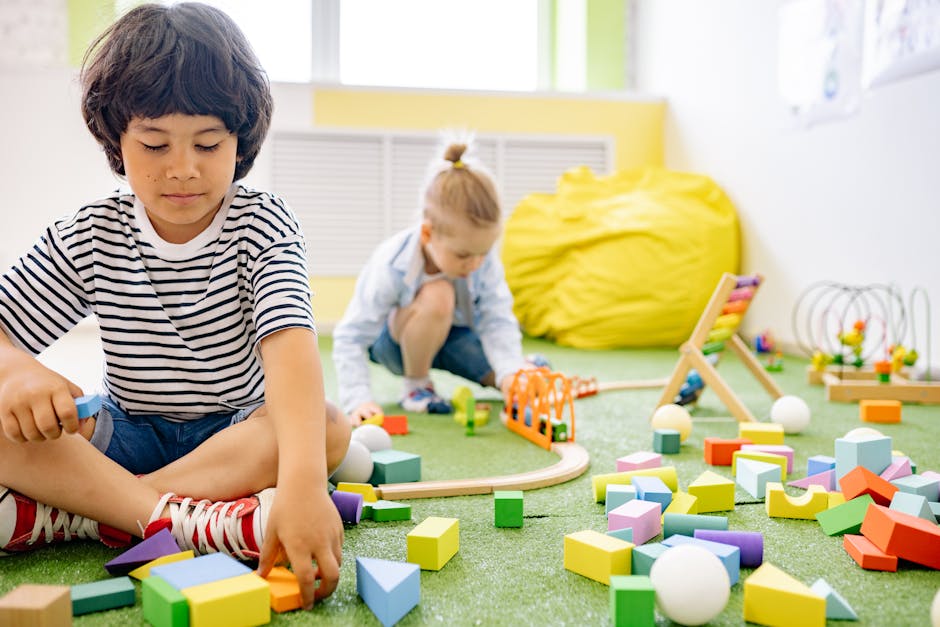
- Open-ended materials. Blocks, art supplies, sand and water, loose parts. These extend attention without the immediate engagement hit of passive viewing. The play is slower to start, which is why screens win the short-term competition. Over time, open-ended play builds more sustained attention than screens do — not less.
- Video calls still count as connection. If reducing screen time means cutting FaceTime with grandparents, stop there. The AAP explicitly excludes video chat from the screen time limits because it involves live, responsive conversation. Keep those calls. They are doing something different than the tablet show.
How We Handle Screens and When to Look Elsewhere
The program is screen-free. No tablets, no educational apps, no background television. The day runs on play, outdoor time, books, art, music, and conversation. Not because screens are the enemy — because eight hours of those other things is more valuable, and there is genuinely more than enough to fill the day without them.
Thirty-two years in, I have watched children who spent their mornings at home with heavy screen access come through the door and need about forty-five minutes to shift modes before they could engage with the room. That is not a character flaw. It is recalibration. The screen environment is high-stimulus and passive. The daycare environment is the opposite. The adjustment is real and it takes time.
You can read more about the daily structure on the About page or review the age-group programs on the Services page.
When Lisa's Rascals is not the right fit — screen-time edition
- If you need a provider who incorporates tablet-based learning activities, educational apps, or structured screen time into the day. Some families specifically want this, and that is a legitimate preference. We do not offer it.
- If you are concerned about your child's transition from a screen-heavy home routine to a screen-free environment, bring that up when you come to tour. It is a real adjustment for some children and I would rather talk about it directly than have you find out at pick-up.
- If you need a provider who documents the day through a parent-facing app or tablet system. Our daily handoff is a verbal conversation at pick-up and availability by phone or email. No app. Some families find that works perfectly; others need the documentation trail.
If none of those apply, call us about availability. Tours take about 30 minutes. You can also read our post on why play-based learning outperforms structured instruction at this age or browse more on the blog.
Frequently Asked Questions
How much screen time is too much for a toddler?
The AAP recommends no screens for children under 18 months (except video chat), limited co-viewed content for ages 18–24 months, and no more than 1 hour per day for children ages 2–5. As of January 2026, the AAP frames those numbers within its 5 Cs approach — Child, Content, Calm, Crowding Out, Communication — rather than treating the minute count as the whole answer. The meaningful threshold is still whether screen time is displacing sleep, physical play, and face-to-face conversation. Those are the three activities most consistently affected by heavy screen use in the longitudinal research.
Why do experts caution against screen time for young children?
Two reasons, primarily. First, toddlers learn poorly from screens compared to learning from real people — researchers call this the video deficit effect. A toddler takes roughly twice as long to learn a new action from a video than from a person demonstrating it in front of them. Second, heavy screen use displaces the activities that matter most at this age: sleep, physical movement, and the thousands of conversational turns per day that build language. Screens are not inherently harmful. What they replace is the problem.
Is educational TV good for toddlers?
For children over 2, co-viewed educational programming has measurable positive effects. Sesame Street has more research behind it than almost any other children's program — decades of studies on vocabulary gains and school readiness outcomes. The operative word is co-viewed: a child watching with an engaged adult who pauses to talk about what is happening gets meaningfully more benefit than the same child watching alone. Background educational TV functions like background TV.
What counts as screen time?
Television, tablets, smartphones, computers, and handheld gaming devices all count. Video calls are treated differently in the AAP guidelines — they involve live, contingent social interaction, which is meaningfully different from passive viewing. Background TV counts toward screen time even when no one is intentionally watching it; the ambient noise and flickering reduce parent-child verbal interaction and interrupt play regardless of whether the child looks at the screen.
Does screen time cause developmental delays?
Excessive screen time — particularly when it replaces sleep, physical activity, and face-to-face conversation — is associated with slower language development and attention difficulties in longitudinal research. The evidence does not support a simple "screens cause delays" statement. Context matters considerably: content quality, whether a caregiver is present and engaged, how much sleep the child is getting, and what the screen time is displacing all factor into the outcome.
How do I reduce my toddler's screen time without a meltdown?
Gradually, not cold turkey. Replace screen time with something more engaging rather than just removing it — audiobooks, playdough, outdoor time, or a video call with a grandparent (which the AAP counts as face-to-face interaction). Do not frame it as punishment. "We are going outside now" lands differently than "no more screen." Start with the easiest wins: no screens during meals, no screens in the hour before bed. Those two changes address the contexts most consistently linked to negative outcomes in the research.
