

A healthy snack for a toddler combines a protein or fat with a carbohydrate — cheese and whole grain crackers, apple slices with almond butter, plain yogurt with berries — so it holds them for two to three hours without spoiling the next meal. It also needs to be a shape their airway can handle: grapes cut into quarters, not served round. Toddlers do well with roughly two planned snacks a day on top of three meals. Thirty-two years of putting snacks in front of toddlers at Lisa's Rascals has taught me the categories matter more than the specific recipe.
One boy in my program refused to eat anything orange for three weeks straight — no carrots, no sweet potato, not even an orange popsicle touching his plate. Day twenty-two, he asked for a second helping of carrots. I did not ask him to explain himself. Toddlers do not owe you their reasoning, and if you wait for it, you will wait longer than the phase itself lasts. [Switches to serious face.] Here is what actually gets eaten at snack time, how often to serve it, what to limit, and what to cut into smaller pieces before it ever reaches the table.
In this article
- What actually makes a snack healthy
- How often toddlers should eat snacks
- Healthy snacks that actually get eaten
- What to limit — juice, popcorn, and the ultra-processed aisle
- Choking hazards: what to cut, skip, or modify
- You decide what. They decide whether.
- How snack time works for eight toddlers at once
- What we serve at Lisa's Rascals — and when to look elsewhere
- Frequently asked questions
What Actually Makes a Snack Healthy
A snack that is only carbohydrate — crackers alone, pretzels alone, a handful of dry cereal — burns off in under an hour. A snack with protein, fat, or fiber added to that carbohydrate holds a toddler for two to three hours, which is the actual point of a snack: bridging the gap between meals without spoiling the next one.
Toddlers also need more calories per pound of body weight than older children and adults. A two-year-old running 22 to 28 pounds needs roughly 1,000–1,400 calories a day, according to USDA MyPlate guidance for toddlers. Most of that needs to be nutritionally dense, because there is not much room in those calories for things that provide nothing.
The American Academy of Pediatrics recommends whole-fat dairy for children under two — full-fat yogurt and cheese, not the reduced-fat versions marketed at adults trying to lose weight. Fat is essential for brain development at this age, and a two-year-old is not the audience for a low-fat diet.
How Often Toddlers Should Eat Snacks
Two planned snacks a day — mid-morning and mid-afternoon — on top of three meals is a reasonable baseline for most one-to-three-year-olds. A small snack before bed can help if dinner was light.
Consistency matters more than variety. Offer snacks at the same time every day; mid-morning around 10:00 and mid-afternoon around 3:00 works for most toddlers on a standard schedule. Predictable snack times mean less grazing, and less grazing means a child actually arrives at meals hungry enough to eat them.
Portions should be small — roughly the size of a toddler's fist. Start there and offer more if they ask. A small portion that gets finished feels like a win for everyone. A large portion that gets pushed around the plate does not.
Healthy Snacks That Actually Get Eaten
These are grouped by what they contribute, not ranked. All of them meet three criteria: real nutritional value, practical to prepare, and a track record of actually being accepted at Lisa's Rascals.
Fruit and vegetable snacks
- Apple slices with peanut or almond butter. Cut thin for two-year-olds. Check for nut allergies before you assume peanut butter is a given.
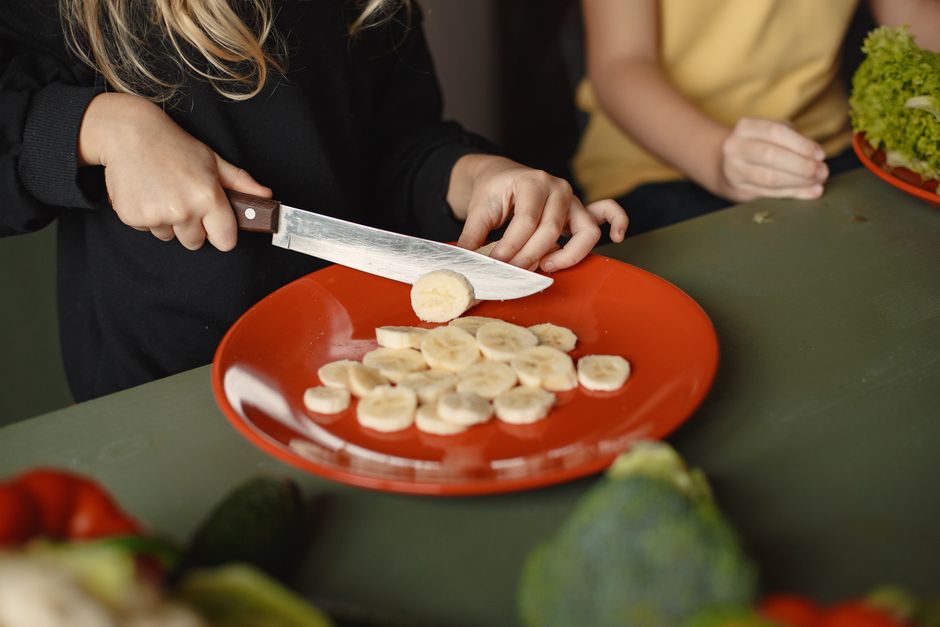
- Banana rounds with a pinch of cinnamon. Bananas are among the easiest foods toddlers accept — no negotiation required.
- Cucumber rounds with hummus. The hummus is the draw. The cucumber is the transport mechanism. Both are fine with me.
- Roasted sweet potato cubes. Roast a batch on Sunday, serve cold or room temperature all week. High in vitamin A. Soft enough for two-year-olds when cut small.
- Steamed broccoli florets with a yogurt dip. Steaming past raw-crunchy removes most of the choking risk and most of the resistance.
- Clementine segments. Already broken into toddler-sized pieces before you even touch a knife.
- Avocado on whole-grain toast triangles. Cut into triangles, because geometry apparently affects palatability for the under-three set. I do not know why. I have accepted it and moved on.
- Frozen banana coins. Cold and slightly firm — a reasonable stand-in for teething relief that also counts as fruit.
- Blueberries, halved for children under two. Whole blueberries are a choking risk at this age. Halved, they are one of the few fruits that gets requested by name.
- Freeze-dried fruit, no added sugar. Read the ingredient label. The only ingredient should be fruit.
Protein snacks
- Hard-boiled egg halves. Six grams of protein per egg, ready in ten minutes, keeps in the refrigerator for a week.
- Edamame, defrosted and shelled. High protein for a plant-based snack, no cooking required. Check for soy allergies, and keep offering — the texture takes some children a few tries.
- Cheese cubes or string cheese. Calcium, fat, and protein, plus something to pull apart, which toddlers find satisfying for reasons I have accepted without needing to understand.
- Hummus with soft pita triangles. A reliable way to get chickpeas into a toddler who has never heard the word chickpea.
- Shredded chicken with a dip. Leftover rotisserie chicken, pulled fine, served plain or with a little ranch or yogurt dip.
- Cottage cheese with soft fruit. A protein-forward alternative for the toddler who has decided yogurt is, this week, an enemy.
Dairy and whole grain snacks
- Plain full-fat Greek yogurt with berries. Do not add honey for children under one.
- Whole grain crackers with cheese. Something to dip and stack, which covers most of what a toddler wants from a snack.
- Low-sugar whole grain cereal, dry. Cheerios and similar rings have been reliably tolerated by children since before I started this program in 1994.
- Mini oatmeal muffins. Bake a batch, freeze half, thaw as needed. Unsweetened or very lightly sweetened.
- Whole grain toast fingers with butter. Cut into strips a toddler can hold without a fork negotiation.
- Smoothie with a handful of spinach. Milk or yogurt base, banana, berries, one handful of spinach blended in. Nobody has ever noticed the spinach.
What to Limit — Juice, Popcorn, and the Ultra-Processed Aisle
The American Academy of Pediatrics is direct here: no added sugar before age two, and limit it after. Not eliminate — limit. A rigid rule around one food tends to make that food more appealing, not less.
Juice is the one most parents do not expect to hear about. Even 100% fruit juice delivers sugar without fiber and trains a preference for sweetness that works against you at snack time. The AAP recommends no juice at all before age one, and no more than four ounces a day for one-to-three-year-olds. Water and whole milk are the better default for this age group.
Popcorn belongs on this list for a different reason: it is a choking hazard, not a nutrition problem. The AAP lists popcorn as unsafe for children under four because the kernels are small, hard, and do not dissolve. This applies to the toddler-marketed puffed versions too, unless the packaging specifically confirms they are safe below age four.
Ultra-processed snack foods — the kind in bright packaging at checkout-aisle height — are engineered to be more appealing than anything you will make at home. A child who fills up on them will not be hungry for the things that actually nourish them, and a preference for that level of flavor intensity takes time to recalibrate.
One rule of thumb: if the ingredient list is longer than five items or includes words you cannot pronounce, it is probably in the ultra-processed category. Shorter lists are not a guarantee, but they are a reasonable starting filter.
Choking Hazards: What to Cut, Skip, or Modify
The main choking hazards for children under three are round, hard, or sticky foods that can block a small airway: whole grapes (quarter them), whole cherry tomatoes (halve them), whole nuts, hard raw vegetable sticks such as carrots, hot dog rounds (cut lengthwise first, then into pieces), large globs of peanut butter, popcorn, hard candy, and gummy candy.
The American Academy of Pediatrics recommends against serving any of these in their full, unmodified form to children under three. When in doubt, cut it smaller than seems necessary. It costs you thirty seconds and removes the guesswork.
You Decide What. They Decide Whether.
Ellyn Satter is a registered dietitian and feeding therapist who spent decades developing what she calls the Division of Responsibility in Feeding. The short version: parents decide what food is offered, when it is offered, and where eating happens. The child decides whether to eat and how much.
That is the whole framework. It sounds simple. It is genuinely hard to follow when your child has eaten nothing recognizable since Tuesday. But the results over decades of practice are consistent: children who are not pressured at mealtimes are more likely to try new foods and develop a healthier relationship with eating overall. If you want the full explanation, Ellyn Satter's Division of Responsibility is the place to start.
At Lisa's Rascals, this is the model I follow. I put out the snack. I do not coax, negotiate, or produce an alternative. Your child eats what they eat. Most days, they eat. Some days, they do not. Both outcomes are fine. The goal is a calm table, not a clean plate.

How Snack Time Works for Eight Toddlers at Once
None of the general nutrition advice out there is written by someone actually serving snack to a room of toddlers twice a day, so here is the part specific to group care.
Prep happens in batches, not per-child. Sweet potato cubes, hard-boiled eggs, and muffins get made on Sunday and portioned through the week. Fruit gets cut the morning of, because pre-cut apple browns by 3:00 and nobody eats a brown apple slice, toddler or otherwise. Rotation, not variety for its own sake, is what makes this manageable — the list above repeats on a two-week cycle, adjusted for what the current group will actually eat.
Maryland caps licensed family childcare at 8 children, which is the reason snack time here looks nothing like snack time at a center with forty kids and a rotating cast of staff. A smaller group means every child gets watched for choking risk by the same person who knows their history, not a staff member meeting them for the first time. This is not a budget version of a larger daycare — it is a deliberately small-class model, and feeding eight children consistently is a different task than feeding sixty.
I do not make separate options. I do not monitor how much each child eats and report it back as an achievement. I put the snack out, sit with them, and talk about something other than the food. Thirty-two years of this has not produced a single food trauma that I know of, and has produced a few children who left the program having discovered they liked edamame. I consider that a reasonable outcome.
What We Serve at Lisa's Rascals — and When to Look Elsewhere
Snacks at Lisa's Rascals are planned, not improvised. Mid-morning and mid-afternoon, every day, rotating through the list above. I follow the Division of Responsibility: I choose what goes on the table, your child chooses what happens next. You can read more about how the day runs on the About page, or see the full program list if you want to know what age groups we currently serve. If you are still deciding, this post on the first day of daycare covers what to expect before food ever comes up.
When Lisa's Rascals is not the right fit for feeding
- If your child has a diagnosed food allergy requiring strict cross-contamination protocols, a larger center with a dedicated kitchen and allergy-trained staff may serve them better than a licensed home daycare can.
- If your child has feeding therapy needs — difficulty chewing or swallowing, extreme texture aversion, or a history of failure to thrive — a program with a feeding therapist on staff is the right first call, not a home daycare.
- If your child requires a specific therapeutic diet, such as ketogenic or gluten-free/casein-free, that goes beyond standard healthy eating, a specialized care setting is better equipped to manage it safely and consistently.
If none of those situations apply and you want to see what is currently available, give us a call or send an email. Tours are free and take about 30 minutes. More posts on practical childcare topics are on the blog.
Frequently Asked Questions
What are the best snacks for a 2-year-old?
The best healthy snacks for a 2-year-old combine protein, fat, and some fiber — enough to sustain energy for two to three hours without filling them up before a meal. Apple slices with almond butter, plain Greek yogurt with berries, hard-boiled egg halves, and cheese with whole grain crackers all meet that standard. Avoid snacks that are almost entirely carbohydrates — they produce a quick energy spike and a faster crash, which tends to show up as a difficult late afternoon.
How often should toddlers eat snacks?
Most toddlers do well with two planned snacks a day — mid-morning and mid-afternoon — on top of three meals. Some children benefit from a small snack before bed if dinner was light. The goal is a predictable schedule that keeps hunger manageable between meals. Grazing all day undercuts appetite at mealtimes and makes it harder for a child to read their own hunger signals.
Is popcorn a healthy snack for toddlers?
Popcorn itself isn't the problem — the shape is. The American Academy of Pediatrics lists popcorn as a choking hazard for children under four because the kernels are small, hard, and don't dissolve. Wait until age four before offering it, even the age-appropriate versions marketed for younger kids.
Should toddlers drink juice?
Sparingly, if at all. The AAP recommends no juice before age one and no more than four ounces a day for children one to three. Even 100% fruit juice delivers sugar without the fiber of whole fruit, and it builds a preference for sweetness that works against you at snack time. Water and whole milk cover hydration better for this age group.
What if my toddler only wants crackers and cheese?
Keep serving it, and keep offering something else alongside it without pressure. A toddler who eats the same accepted snack for weeks is not a crisis — it is a toddler. Add one new food to the plate at a time, unpressured, next to the food you know they'll eat. Repetition, not variety, is what eventually gets a new food accepted.
Should I force my toddler to finish their snack?
No. Pressuring a child to eat more than they want overrides their hunger signals, which are the only accurate guide to how much they actually need. The Division of Responsibility model, developed by feeding specialist Ellyn Satter, is clear on this: the parent decides what is offered, the child decides how much they eat.
What snacks are not safe for children under 3?
The main choking hazards for children under three are whole grapes (quarter them), whole cherry tomatoes (halve them), whole nuts, hard raw vegetables such as carrot sticks, hot dog rounds, large globs of peanut butter, popcorn, hard candy, and gummy candy. The American Academy of Pediatrics recommends against serving any of these in their full, unmodified form. When in doubt, cut it smaller than seems necessary.
